Names and contact details
Start here, before anything else. Names and phone numbers are the easiest details to lose track of once people start driving away, and the hardest to recover later.
For every other driver involved, write down:
- Full legal name, as it appears on their license
- Phone number
- Home address
- Email address, if they’re willing to give it
Do the same for any passengers in any vehicle, and for pedestrians or cyclists involved. If there were witnesses who stopped, ask for their name and phone number too. A witness who leaves without giving contact information is gone for good — most people will not track you down later, even if they mean to.
If a passenger or witness seems reluctant to share details, it’s fine to simply ask, “Can I get your name and number in case the insurance companies need to follow up?” Framing it as a normal, expected step usually gets a straightforward answer.
Police and any responding officer
If law enforcement responds, get the officer’s name, badge number, and the agency they work for. Ask how to obtain a copy of the report once it’s filed, and note the report or case number if one is issued on the spot. This report becomes a reference point for your insurer later, so the officer’s information matters almost as much as the other driver’s.
Insurance and license information
This is the information your insurer will ask for first when you call in the claim, so getting it right at the scene saves a lot of back-and-forth later.
From every other driver, collect:
- Insurance company name
- Policy number, from their insurance card
- Driver’s license number and the state that issued it
The easiest way to get all of this accurately is to photograph both sides of their insurance card and both sides of their license, if they’re willing. A photo removes any chance of a transposed number or a misheard letter. If someone hesitates to hand over a license, it’s reasonable to just photograph the insurance card and confirm the name matches what’s on their ID.
Check that the name on the insurance card matches the name of the person driving. Sometimes a car is insured under a spouse, a parent, or an employer, and that’s normal — but note it, because it affects who your insurer will be corresponding with.
If the driver isn’t the vehicle owner
If the person driving the other car isn’t the registered owner — a rental, a borrowed car, a company vehicle — write down both the driver’s information and the owner’s information if it’s available. Rental agreements and vehicle registrations sometimes list this separately from the insurance card.
Your own information
While you’re gathering this from others, pull your own insurance card and license as well. It’s easy to assume you already know your policy number, but confirming it on the spot means you’re not searching for it later while trying to remember everything else.
Vehicle and license plate details
Vehicles get described inconsistently after the fact — “a dark SUV” isn’t much help a week later. Get the specifics down while the car is still in front of you.
For each vehicle involved, record:
- License plate number and the state on the plate
- Make, model, and year, if you can tell or the driver confirms it
- Color
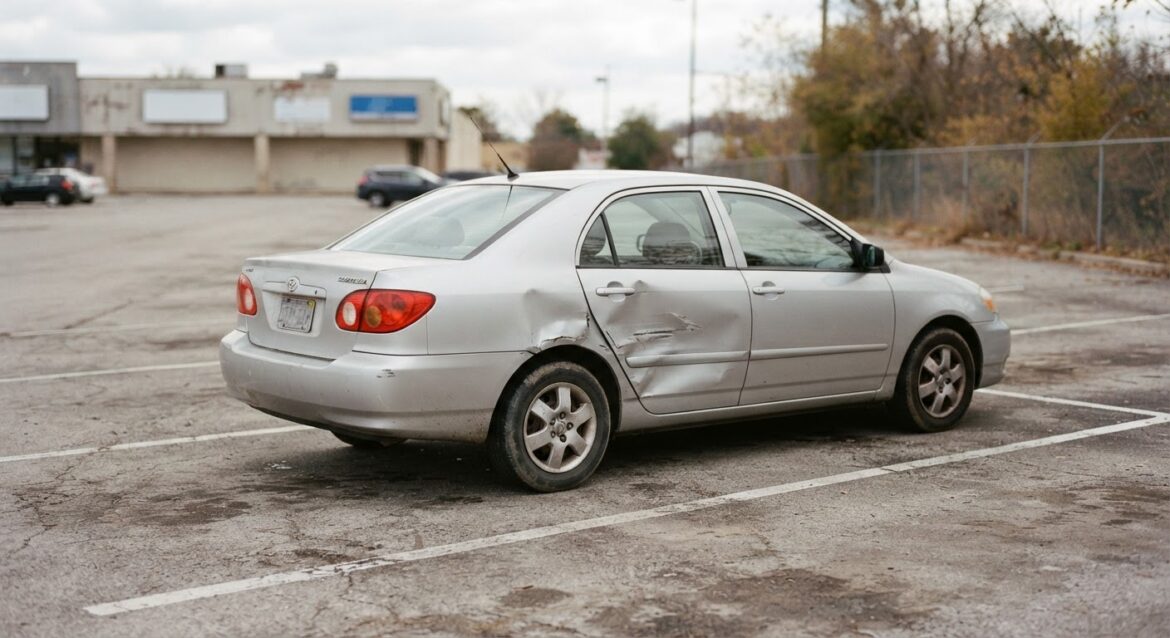
- Any visible damage, and where it’s located on the vehicle
A plate number is often the single most useful piece of information you can walk away with, because it ties directly back to a specific insurance policy even if other details turn out to be wrong or incomplete. If you can photograph the plate clearly, do that in addition to writing it down.
Photos do a lot of the work for you
Take photos of each vehicle from multiple angles — front, back, both sides, and close-ups of the damage. Include a wide shot that shows the vehicles’ final positions relative to each other and to the road. If it’s readable, photograph the VIN, usually visible through the windshield on the driver’s side dashboard or on a sticker inside the driver’s door frame. None of this requires special skill. A phone camera capturing everything in view is more reliable than trying to describe it from memory later.
Scene details that matter later
Once the people and vehicles are documented, take a few more minutes for the scene itself. These details rarely feel important in the moment, but they’re often exactly what an insurer or adjuster asks about first.
Location
Note the exact location: street names, nearest cross street or intersection, mile marker if you’re on a highway, or a landmark if there’s no clear address. Your phone’s location services can drop a pin automatically if you’re not sure of the exact address — that’s a reliable backup.
Time and conditions
- The time the incident happened
- Weather conditions — clear, rain, snow, fog, glare from the sun
- Road conditions — wet, icy, under construction, potholes, debris
- Lighting — daylight, dusk, streetlights, or darkness with no lighting
These details help explain context later. A wet road or low sun isn’t something anyone can dispute after the fact, but only if it was written down at the time rather than reconstructed from memory weeks later.
Direction of travel and what happened
Write a short, factual account: which direction each vehicle was traveling, what each vehicle was doing right before the incident (stopped at a light, changing lanes, turning), and where the point of impact was. Keep it factual and specific rather than interpretive — describe what happened, not whose fault it was. That judgment isn’t yours to make at the scene, and it isn’t necessary for the notes to be useful.
A simple diagram helps more than people expect. Even a rough sketch on paper or in a notes app — boxes for vehicles, arrows for direction of travel, a mark for the point of impact — captures something a written paragraph often loses.
Traffic signals, signs, and lane markings
If a traffic light, stop sign, or lane marking was relevant to how the incident occurred, note it and photograph it if you can. Traffic signal timing and sign placement are exactly the kind of thing that’s obvious while you’re standing there and easy to misremember later.
Surveillance and dash cameras
Look around for anything that might have recorded the moment: a business with a visible security camera, a traffic camera at the intersection, or a dash camera in your vehicle or another driver’s. If you spot a business camera, note the business name and address so it can be followed up on quickly — footage from these systems is often overwritten or deleted after a short window, so speed matters here more than with almost anything else on this list.
A short list to keep in your car
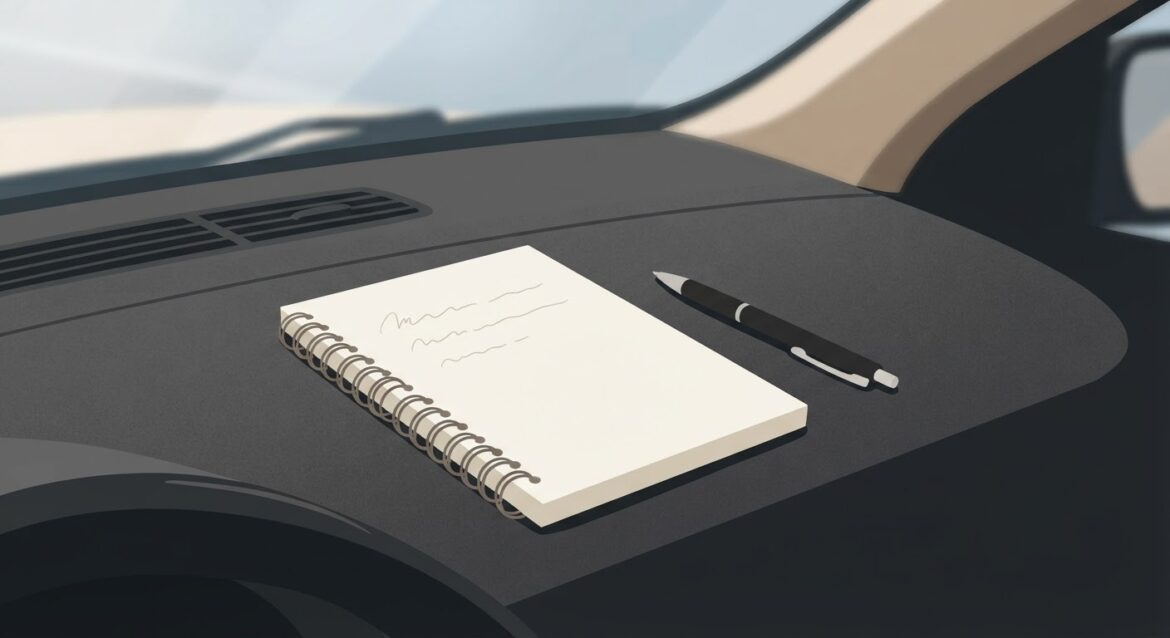
All of this is easier if you’re not trying to remember it while shaken up. Keep a small notepad and pen in your glove compartment, or save a checklist in your phone’s notes app, with these categories:
- Names, phone numbers, addresses of drivers, passengers, and witnesses
- Insurance company, policy number, license number for each driver
- License plate, make, model, color for each vehicle
- Location, time, weather, and road conditions
- Photos: vehicles, damage, plates, the scene, VINs, and any signage or signals involved
- Police officer’s name, badge number, and report number if applicable
Once you have this information gathered, the next step is contacting your insurer to start the claim. Check your policy documents or your insurer’s app for the specific way they want a claim reported — most now accept photos and notes directly, which makes everything you’ve just collected immediately useful rather than something you have to summarize from memory days later.