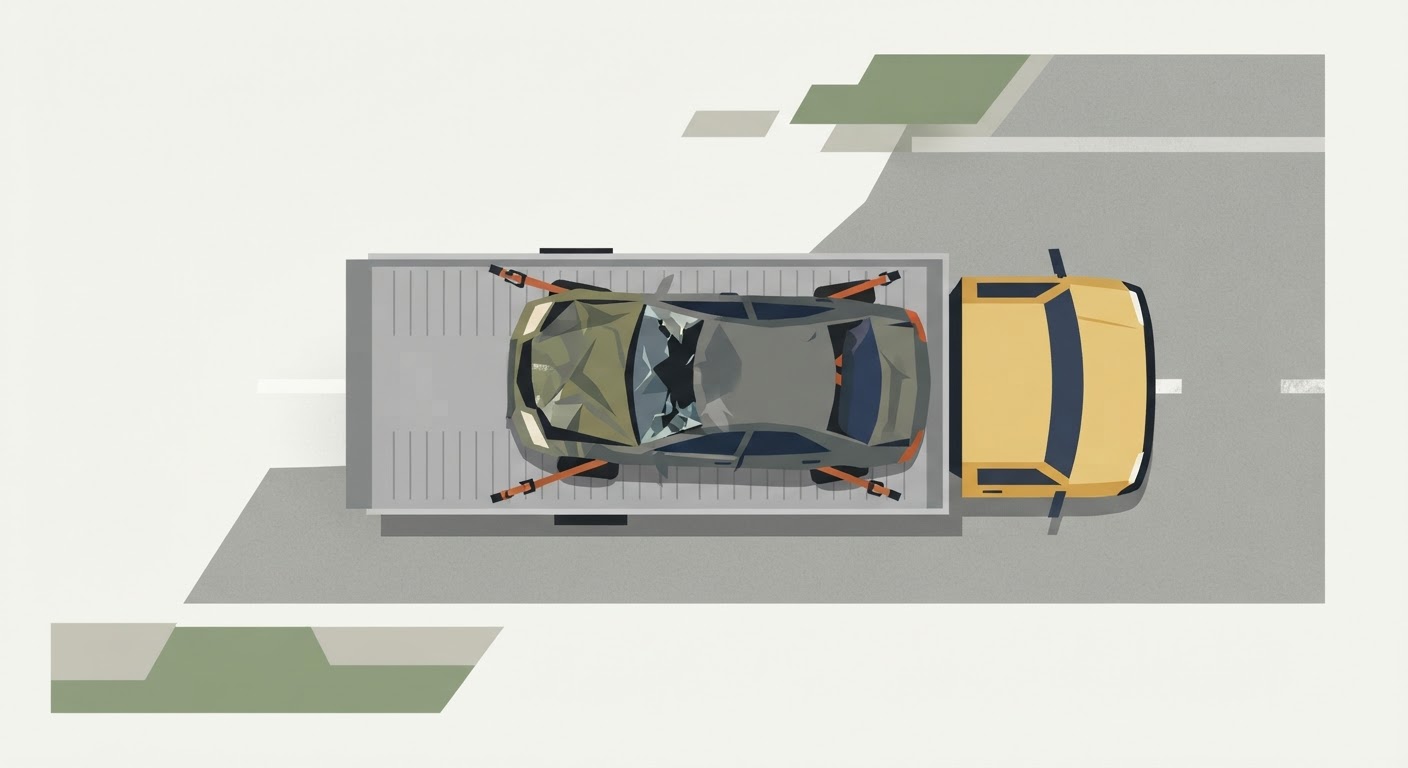
When your car comes back from the body shop estimate with a number that makes your stomach drop, it helps to understand what the adjuster is actually calculating. It isn’t guesswork, and it isn’t personal. It’s a fairly mechanical comparison between two numbers, run through a formula set by your state and your insurer’s internal rules. Knowing how that comparison works won’t change the outcome, but it will help you understand the letter or call you’re about to get.
Comparing Repair Cost to Vehicle Value
At the center of every total loss decision are two figures: what it would cost to fix your car, and what your car is worth right now.
The repair cost side comes from an estimate, usually written by a body shop or an insurance appraiser using specialized software. That estimate includes parts, labor, paint, and any specialty work the vehicle needs. It’s built line by line, the same way a mechanic would quote a repair, except the goal here is to get a complete number, not just a starting point.
The value side is trickier than most people expect. The adjuster isn’t looking at what you paid for the car, what you still owe on a loan, or what a dealership listed a similar car for last month. They’re looking at what’s often called Actual Cash Value, or ACV. This is an estimate of what your specific car, in its specific condition, with its specific mileage, could have been sold for right before the accident happened. Insurers typically generate this using databases that pull comparable local sales and adjust for your car’s options, mileage, and condition.
This is worth sitting with for a moment, because it’s the source of most of the frustration people feel during this process. Your car’s value, for insurance purposes, has nothing to do with your emotional attachment to it, how well you maintained it, or what you’d need to spend to replace it with something you’d actually want to drive. It’s a market-based number, not a personal one.
Once both numbers exist, repair cost and ACV, the adjuster compares them. If repairing the car costs meaningfully less than the car is worth, the insurer will typically authorize the repair. If the repair cost gets close to or exceeds the value, the total loss conversation starts.
What the Total Loss Threshold Means
Here’s the part that surprises a lot of drivers: your car doesn’t need to be destroyed to be declared a total loss. It just needs to be expensive enough to fix relative to its value.
Every state sets a rule, usually expressed as a percentage, called the total loss threshold. If the estimated repair cost reaches that percentage of the vehicle’s value, the insurer is required or permitted to declare it a total loss rather than repair it. The exact percentage varies by state, and some states use a different formula entirely, comparing repair cost plus salvage value against the car’s worth. Because this number differs by state and occasionally gets adjusted, it’s worth checking your own state’s current threshold directly with your state’s department of insurance or your insurer rather than assuming a figure.
What this means practically: a car with what looks like moderate damage can still get totaled if it’s an older vehicle with a low market value. A bent bumper, a cracked headlight housing, and some frame work might add up to a repair bill that’s small in absolute dollars but still crosses the threshold for a car that wasn’t worth much to begin with. Meanwhile, a newer, more valuable car might absorb a much larger repair bill and still come out below the threshold, because the value side of the equation is so much higher.
This is why two people can describe eerily similar accidents and get completely different outcomes. The damage isn’t the only variable. The car underneath it matters just as much.
It’s also why the threshold exists at all, rather than insurers just repairing everything. Once repair costs climb close to a car’s value, there’s little financial sense in spending nearly as much (or more) than the car is worth to fix it, especially when a repaired car may still carry diminished value or unresolved risk afterward. The threshold is a formalized version of a math problem most people would run in their heads anyway.
Hidden Damage That Changes the Math
The estimate you see after the first inspection is rarely the final word. Cars hide damage the way icebergs hide mass, and a lot of what actually happened in a collision isn’t visible until a shop starts taking things apart.
A few things adjusters and shops commonly find once repairs begin:
- Frame or structural damage that wasn’t apparent from the exterior, especially in moderate-speed collisions where the visible damage looks contained.
- Airbag and safety system damage, which can be expensive to replace and sometimes requires replacing components beyond the airbags themselves, like sensors and wiring harnesses.
- Damage to the electrical or computer systems, increasingly common as cars pack in more sensors and modules, where a single damaged component can cascade into a large parts bill.
- Suspension or alignment issues that only become clear once the car is up on a lift.
Any of these can push a repair estimate that initially looked reasonable into total loss territory. This is why an insurer might approve a repair shop to start work, only to call back a few days later with a revised number. It’s not a sign that anyone made a mistake at the start. It’s a sign that the full scope of damage wasn’t visible until the car was opened up.
If you’re in the middle of this process and the number keeps changing, it’s fair to ask the shop or adjuster what specifically was found that changed the estimate. A straight answer should be available, since the added damage has to be documented to justify the new number.
What Happens Once a Car Is Declared Totaled
Once the total loss determination is made, the process shifts from repair logistics to a settlement calculation, and the shape of what happens next depends heavily on one thing: whether you owned the car outright or still had a loan or lease on it.
The insurer will present a settlement offer based on that Actual Cash Value figure, usually accompanied by documentation showing how they arrived at it, comparable vehicle listings, adjustments for mileage and condition, and so on. It’s worth reading that documentation rather than just the final number, because it shows you exactly what assumptions went into the figure.
If you owned the car free and clear, the settlement (minus your deductible, if the claim is going through your own collision coverage) is paid out, and the vehicle title transfers to the insurer, who will typically sell it for salvage.
If you still owed money on a loan or lease, the math gets an extra step. The settlement funds go first toward paying off the remaining loan balance. If the car was worth more than what you owed, you receive the difference. If you owed more than the car was worth, which happens more often than people expect, especially with newer cars or longer loan terms, you’re left responsible for the gap between the settlement and your loan balance. This is the exact scenario that gap insurance, an optional coverage add-on, is designed to address, and it’s worth checking whether your policy included it before this point ever arrives.
A few practical things tend to happen around the same time as the settlement:
- Rental coverage, if you have it, has an end date. It typically stops once the settlement offer is made or the car is deemed a total loss, not whenever you finish shopping for a replacement.
- You may be asked to remove personal property from the vehicle before it’s picked up for salvage, so it’s worth checking the car for anything left behind before that happens.
- The vehicle’s title gets marked, usually with a salvage or total loss designation, which follows the vehicle’s history from that point on, even if it’s later rebuilt and resold.
- You’ll need to sign over the title to complete the transaction, so having that document accessible speeds things along.
Occasionally, an owner wants to keep the totaled vehicle rather than hand it over, maybe to fix it themselves or keep it for parts. Most insurers allow this as an option, but the settlement is usually adjusted to subtract the vehicle’s salvage value, and the title still gets marked accordingly. If this is something you’re considering, ask your adjuster directly what the retained-salvage process looks like with your specific insurer, since the mechanics vary.
The Short Version
A total loss decision comes down to comparing what your car is worth against what it costs to fix, run through a state-set threshold. It isn’t about how the car looks or how you feel about it. Hidden damage discovered mid-repair can shift a borderline case into total loss territory even after work has started. And once the declaration is made, what happens next depends largely on whether you owe money on the vehicle, which is exactly the kind of detail worth knowing before you’re in the middle of a claim, not while you’re standing in a body shop parking lot trying to make sense of a number on a page.