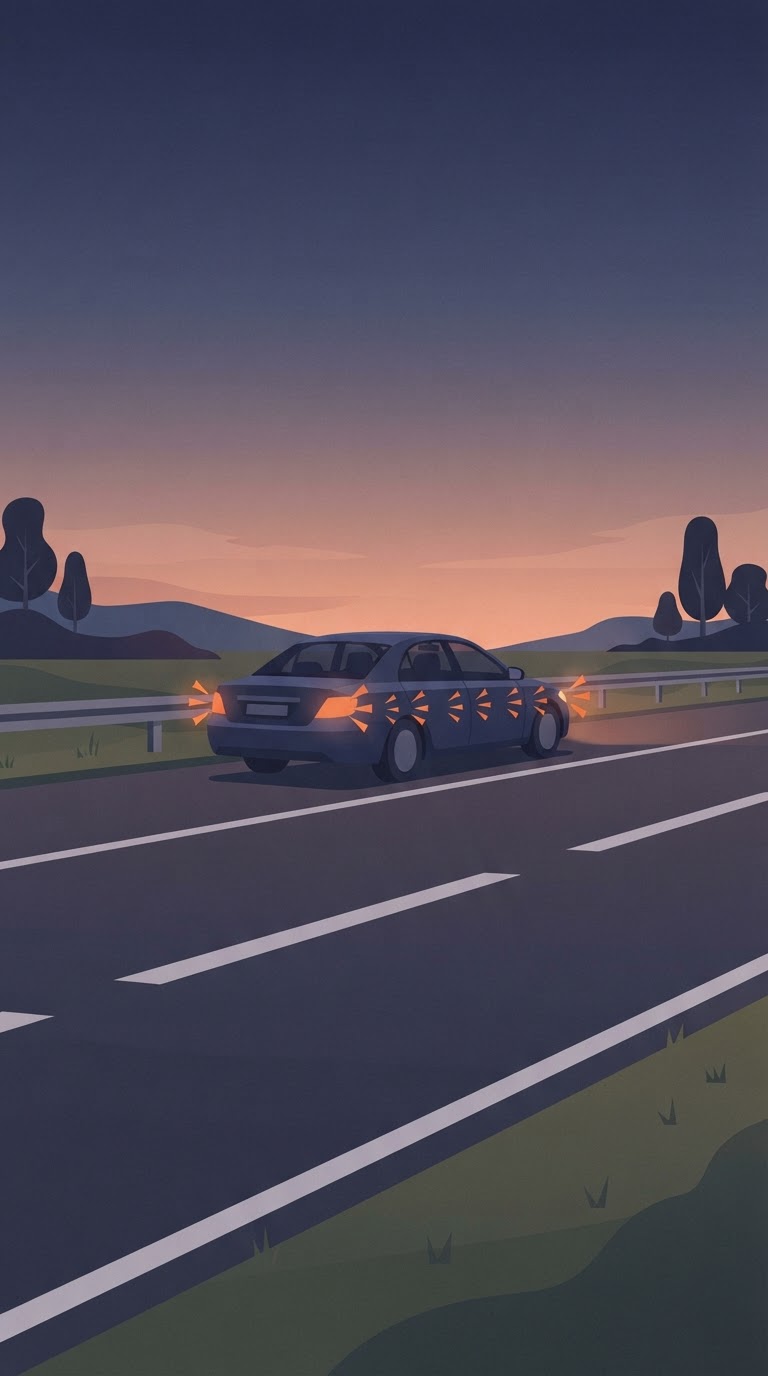
The moment after impact is disorienting. Your ears might be ringing, your hands might be shaking, and your mind is probably racing through a dozen things at once. That’s normal. It’s also exactly why having a fixed order of operations matters right now — you don’t have to think clearly, you just have to follow the steps in order. Here’s what that order looks like.
Step One: Check for Injuries Before Anything Else
Before you touch a phone, before you check the damage to your car, before you even think about the other driver — stop and check yourself and your passengers. This isn’t about diagnosing anything. It’s about figuring out whether the very next thing you do should be different because someone is hurt.
Take a breath. Move your hands, your feet, your neck, slowly. Ask each passenger directly: “Are you hurt? Can you move?” Don’t assume silence means “fine” — someone in shock may not immediately recognize or report pain.
If anyone is unconscious, having trouble breathing, bleeding heavily, or reports numbness, severe pain, or an inability to move, do not attempt to move them yourself unless staying put puts them in immediate danger (like a fire risk or being in the path of traffic). Call 911 right away and let the dispatcher guide you. This is not the moment to assess or treat anything on your own — that’s what trained responders are for.
If everyone seems okay, that’s genuinely good news, but keep it in the back of your mind that some injuries — particularly ones involving the neck, back, or head — don’t announce themselves right away. That’s a conversation for a medical professional later, not something to sort out standing on the side of the road. For now, the only question is: does anyone need help getting out of this car immediately, or can we move to the next step?
Step Two: Move to Safety If You Can
If you and your passengers are able to move, and the vehicles are drivable, the next priority is getting out of the flow of traffic. A stopped car in a live lane — even a slow one, even in a parking lot — is a second collision waiting to happen. More people are hurt or killed by secondary crashes at the scene of a first one than most drivers realize.
If you can do so safely, move your vehicle to the shoulder, a nearby parking lot, or as far to the side as the road allows. “Safely” is the key word — if moving the car means driving on a shredded tire, a car that won’t steer straight, or through a cloud of steam or smoke, leave it where it is and get people out and away from the vehicle instead, standing well clear of traffic.
A few things worth knowing before you move anything:
- In most states, if the vehicles are driveable and no one is seriously injured, you’re expected to clear the roadway rather than leave cars sitting in a live lane — this is often referred to as a “move over” or “steer it, clear it” expectation, and it exists to prevent secondary crashes, not to rush your claim.
- If you have a phone, take a few quick photos of the vehicles’ positions before you move them, if it’s safe to do so in the few seconds it takes. This isn’t urgent — safety comes first — but it can be genuinely useful later.
- If a vehicle can’t be moved, or you’re not sure it’s safe to move it, leave it and get people to safety instead. A car is replaceable. Standing in a travel lane is not a risk worth taking to preserve the exact resting spot of a bumper.
Once everyone is out of the roadway and away from traffic — on a sidewalk, a shoulder, behind a guardrail, anywhere with distance from moving cars — you can move to the next step.
Step Three: Turn On Hazards and Call 911
As soon as you’re stopped, whether you moved the car or not, turn on your hazard lights. This takes two seconds and it’s one of the most important things you can do — it tells every other driver approaching the scene that something is wrong, well before they can see why.
If you have reflective triangles or flares in your trunk and it’s safe to place them, this is the moment. Set them behind the vehicles, at a distance, especially if visibility is poor or you’re on a highway. If you don’t have them, don’t worry about it — hazards and distance from the road are what matter most.
Now call 911. Do this even if the damage looks minor and everyone says they feel fine. There are a few reasons this call matters more than it might seem to in the moment:
- A responding officer can create an official record of the crash. That record becomes a reference point for everyone involved later, including insurance companies, and it removes a lot of the “he said, she said” that tends to creep into memory after a stressful event.
- If anyone’s condition changes — and adrenaline can mask pain for the first several minutes — emergency medical responders are already on the way rather than being called after the fact.
- Dispatchers can tell you whether police will respond in person or whether, for a minor crash with no injuries, you’ll be directed to file a report at a station or online instead. Rules on this vary by location, so let the dispatcher tell you what applies where you are rather than guessing.
When you call, stay calm and give the basics: your location as precisely as you can describe it, whether anyone is injured, and whether vehicles are blocking traffic. The dispatcher will ask follow-up questions — answer them plainly and let them direct the call. You don’t need to editorialize about who caused the crash. That’s not what this call is for, and it’s not information the dispatcher needs from you in order to send help.
What to Do While You Wait for Help
Once hazards are on and the call is made, there’s often a stretch of time — a few minutes, sometimes longer — before anyone arrives. This waiting period is where a lot of drivers either freeze up or start doing the wrong things out of nervous energy. Here’s how to spend it usefully instead.
Stay put and stay visible
Stand well away from traffic, but stay near enough to your vehicle that you’re there when help arrives. If it’s dark or visibility is poor, staying visible to approaching traffic matters as much as staying out of the road itself.
Check on the other people involved
If it’s safe to approach, check whether occupants of the other vehicle are okay. Keep this simple and human — “Is everyone alright over there?” is enough. This isn’t the moment to discuss what happened, apportion blame, or speculate about who did what. Adrenaline makes people say things they don’t mean, and those statements can create confusion later that has nothing to do with what actually occurred. Save the details for the officer and for your insurance company.
Document what you can, calmly
If you’re physically able and it’s safe, use your phone to take photos: the position of the vehicles, damage to each car, the road and surroundings, any relevant traffic signs or signals, and weather or lighting conditions. If there’s visible debris or skid marks, a photo of those can help too. There’s no need to rush this or make it exhaustive — a handful of clear photos taken calmly is more useful than a frantic pile of blurry ones.
Exchange basic information with the other driver if you haven’t already and it’s safe to do so: names, phone numbers, insurance company and policy number, license plate, and driver’s license number. Write it down or photograph the documents rather than relying on memory.
If there are witnesses nearby who saw what happened, ask if they’d be willing to give you their name and phone number. Not everyone will want to get involved, and that’s fine — you’re not obligated to convince anyone.
Avoid a few common missteps
- Don’t get into a discussion about fault with the other driver, even a friendly one. It’s natural to want to smooth things over verbally, but this isn’t the time or place, and it’s not necessary for anything that happens next.
- Don’t leave the scene before police have arrived or released you, even if the other driver suggests just “handling it between us.” Leaving early can create real complications later that have nothing to do with the crash itself.
- Don’t accept a cash offer on the spot to avoid involving insurance, even if it sounds convenient in the moment. Damage that looks minor at the scene can turn out to be more involved once a mechanic actually looks at it, and a documented process protects everyone better than a handshake does.
When help arrives
Let the paramedics do their job first if anyone needs attention. When you speak with the responding officer, stick to what you observed — what happened, where, and when — rather than guessing at things you didn’t see or assigning blame. The officer’s report will become part of the official record, and a plain, factual account from you is the most useful thing you can contribute to it.
Once the scene is cleared and everyone is safe, the next steps — notifying your insurance company, arranging repairs, and understanding what happens with your policy from here — can wait until you’re calm and somewhere stable. The first five minutes are about safety and information. Everything else has room to happen afterward, and it’s worth taking the time to do it right rather than rushing because the crash itself felt rushed.